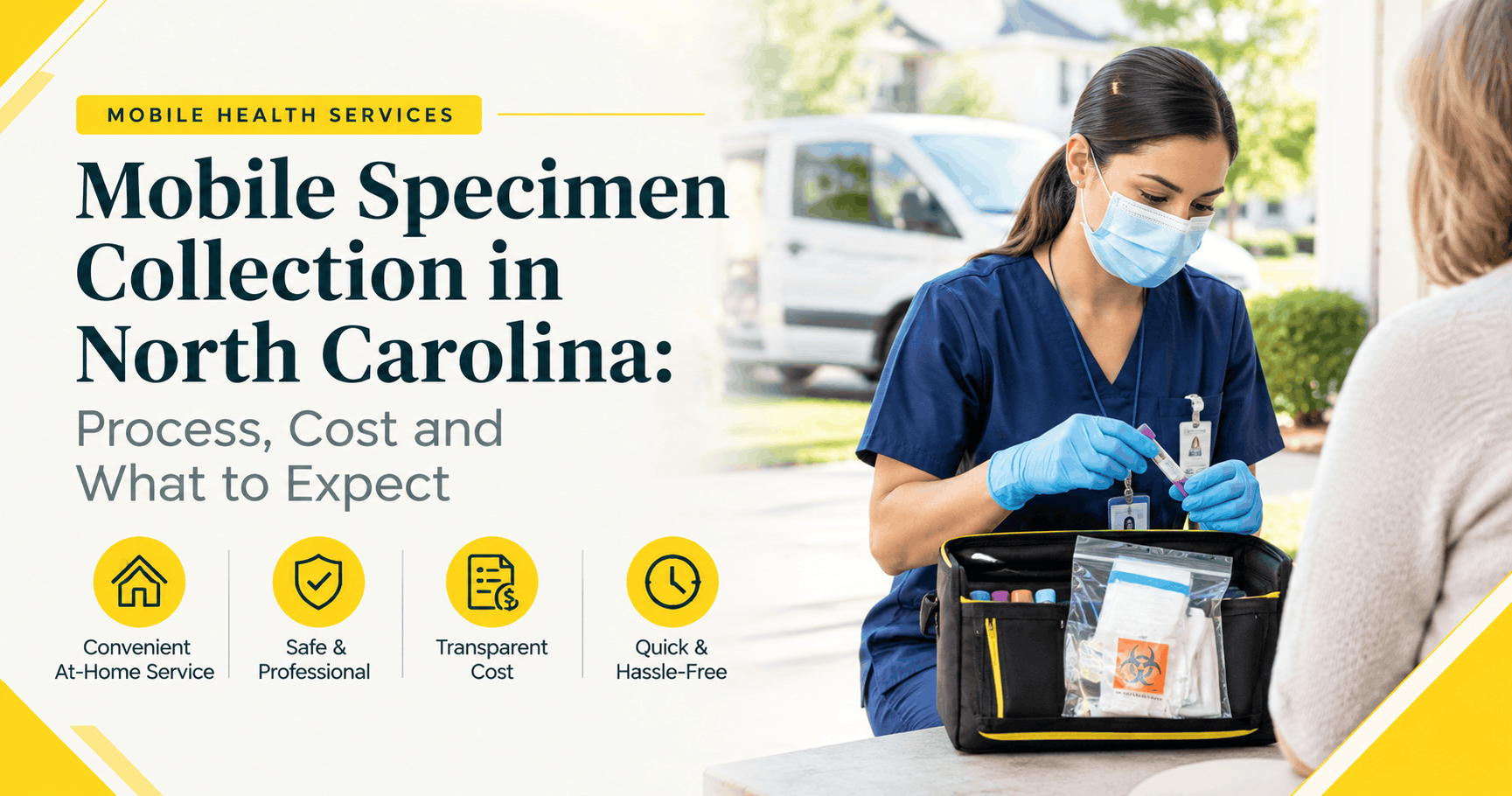
Mobile Specimen Collection in North Carolina: Process, Cost and What to Expect
Let’s be real — getting drug testing done isn’t always as simple as it sounds, especially when your employees are scattered across different shifts or someone just can’t swing by a testing facility during business hours. Maybe your warehouse crew works nights, your sales team is constantly on the road, or you’ve got a new hire who needs a pre-employment screen but doesn’t have a car to get across town. That’s the whole reason for services like mobile specimen collection in NC to exist. Instead of making people come to a lab, a collection professional comes to them — the workplace, a home, wherever’s approved and makes sense for the situation.
Whether you’re dealing with workplace screening, a one-off individual test, or something tied to compliance, it helps to actually know how the process works, what it costs, and what’s on offer before you book anything. Going in blind usually means scrambling at the last minute, so a little homework upfront saves everyone a headache later. So let’s walk through what you can expect with mobile specimen collection in North Carolina, from the first phone call to getting your results back.
What Exactly Is Mobile Specimen Collection?
In plain terms, it’s a trained collector coming out to wherever you’ve agreed to meet and collecting a specimen for testing right there, instead of you having to find time to drive somewhere and sit in a waiting room. Depending on who you’re working with, that might mean urine drug testing, breath alcohol testing, or DNA collection — and some providers handle all three, while others specialize in just one or two.
It cuts out the travel, and if you’re an employer juggling several employees across different sites or shifts, it makes life a lot easier logistically — no more coordinating everyone’s schedules around a single lab’s open hours. One thing worth knowing, though — mobile collection doesn’t always mean the testing happens on the spot. A lot of the time, the specimen still has to make its way to a lab for actual analysis, so “mobile” refers to where the sample is taken, not necessarily where it’s processed.
If you’re setting up mobile specimen collection in Raleigh or somewhere nearby, it’s worth confirming upfront what services are actually available, what ID you’ll need, and what appointment windows look like — because not every provider runs the same hours or covers the same radius.
Who’s Actually Using This?
Mobile specimen collection ends up serving a pretty wide mix of people and organizations, honestly, and the reasons people reach out vary quite a bit.
Employers: Setting up pre-employment, random, or post-incident testing based on whatever policies or regulations apply to them, often across multiple job sites at once.
Individuals: Getting tested without having to trek out to a collection facility themselves — handy for anyone with a packed schedule or limited transportation.
Legal and court-related situations: Need collections properly documented, with specific ID checks and chain-of-custody steps followed to the letter, since any gap in the paperwork can undermine the whole process.
Travelers and remote workers: Need to get tested while they’re away from their usual home base or workplace, whether that’s a business trip or a temporary assignment somewhere new.
If you’re out there googling “mobile drug testing near me”, just make sure whoever you find actually offers the specific test and paperwork your situation calls for — not every provider covers everything, and some only handle non-regulated testing rather than DOT-compliant collections.
How a Mobile Collection Actually Plays Out
Booking and Verifying ID
It starts with scheduling an appointment. You’ll need to hand over the collection address, which test you need, a preferred time, and how many people need testing. If you’re an employer, you might also need to get authorization forms sorted ahead of time, especially for regulated or safety-sensitive positions.
Make sure you’ve got the right ID on hand and follow whatever prep instructions come your way — some tests require nothing special, while others might ask you to avoid certain substances beforehand. And before you lock in that appointment, it’s smart to ask about travel charges, any after-hours fees, and whether there’s a minimum booking requirement, since pricing structures can vary quite a bit between providers.
The Collection Itself and Chain of Custody
When the collector shows up, they’ll verify identity first, then follow whatever procedure the requested test calls for. For urine testing specifically, that means collecting the specimen in the right kind of container and filling out the necessary paperwork, step by step, to make sure nothing gets missed.
A chain-of-custody record tracks exactly how the specimen was handled and passed along — who collected it, when, how it was sealed, and who touched it next — and this part really matters for employment, legal, or regulated testing situations where the results might end up being scrutinized later.
If you need DOT specimen collection in NC, make sure the provider is actually following U.S. Department of Transportation requirements and sending out collectors who are properly qualified for it, since DOT testing comes with its own strict set of rules that non-DOT collections don’t have to follow.
Getting It to the Lab and Getting Results Back
Once collection’s done, the specimen gets labeled, packaged up, and sent off following the required steps, usually with tamper-evident seals and documentation that travels along with it. From there, the lab runs whatever analysis was requested, whether that’s a basic panel or something more involved.
How long results take really depends on the test itself, how backed up the lab is, and whether anything needs extra analysis — a routine negative result might come back fast, while anything flagged for confirmation testing can take longer. It’s worth asking upfront how you’ll actually get the results, who else can see them, and who you talk to if questions come up afterward, since different providers handle result delivery differently.
Types of Collection You Might Need
Mobile providers can offer a few different options depending on what they’re set up to do and what you actually need, so it’s worth checking their full menu of services rather than assuming they cover everything.
Urine drug testing: A professional collects the specimen wherever it’s approved and handles getting it over to the lab when needed — this tends to be the most commonly requested service.
Breath alcohol testing: Some providers run breath testing for workplace programs and other permitted situations, often using calibrated devices that meet specific regulatory standards.
DNA collection: Certain providers do cheek-swab collection for paternity, legal, or personal reasons. If it’s for legal purposes, double-check the ID and chain-of-custody requirements first, since courts typically won’t accept results without proper documentation.
At-home specimen collection is sometimes an option for certain tests, but not everything can be done at home — so confirm with the provider before you lock in a booking, particularly if the results need to hold up for legal or employment purposes.
What’s This Going to Cost You?
Pricing on mobile collection shifts depending on the test, how far the collector has to travel, what time the appointment’s at, and lab fees on top of that. Some providers just charge per collection, while others offer group pricing if you’ve got multiple people to test at the same location.
As a rough example, a urine collection might run somewhere around $65 per collection, though that really varies by provider and what’s included — some quotes bundle in the lab fee, while others list it separately. Treat that as a ballpark figure, not a locked-in current rate, and always confirm current pricing before you commit.
When you’re sizing up the on-site specimen collection cost, ask for an itemized quote that breaks out collection, lab testing, travel, and anything else that might get tacked on, like after-hours surcharges or rush processing fees. If you’re an employer booking multiple tests, definitely ask about group rates — they can knock the per-person cost down noticeably, especially if you’re testing a whole shift or department at once.
Just make sure you’ve got the full price nailed down before booking so nothing catches you off guard later, since surprise fees are one of the most common complaints people have with mobile testing services.
Mobile Collection or Just Walk Into a Lab?
Mobile collection really shines when you’ve got employees at one location, getting around is a hassle, or you need several people tested at once — think of a warehouse running a random testing round, or a new employee orientation day where five or six people all need screening together. On the other hand, if someone lives close to a lab and can get there on their own, a walk-in facility might just be the cheaper, simpler route.
Before deciding, weigh appointment availability, travel fees, how long you’ll be waiting around, and what documentation each option requires. For employers, mobile visits tend to simplify coordination and cut down on time employees spend away from their actual work, which adds up fast when you’re paying hourly wages for time spent sitting in a lobby. For individuals, though, a walk-in spot can end up cheaper once you factor in mobile travel charges, so it really comes down to your specific situation and how much your time is worth to you.
Where This Is Available in NC
Spyda Testing Services covers Raleigh and the surrounding North Carolina area, though exact availability shifts depending on location and what service you’re after. Nearby spots typically include Cary, Durham, Apex, Garner, Wake Forest, and Morrisville, and coverage can extend further out depending on demand and scheduling.
Need mobile specimen collection in Raleigh or somewhere else in the state? Just pass along your address when checking availability, and confirm whether you’re actually inside the service area or if extra travel charges might apply for locations a bit further out from the usual coverage zone.
How to Actually Book
To set up an appointment, you’ll need to provide the test type, where the collection should happen, your preferred time, and how many people need testing. If you’re booking for a business, make it clear whether you need DOT or non-DOT testing, since that distinction affects everything from which collectors are assigned to how the paperwork gets filled out.
Reach out to Spyda Testing Services to nail down availability, pricing, group rates, and any travel fees. If you need mobile urine collection, ask about what ID and prep are required so there are no surprises on the day of the appointment. Thinking about at-home specimen collection? Just confirm the specific test is actually suitable for a residential setting first, since not every test type can be reliably collected outside a controlled environment.
And if your business needs DOT specimen collection in NC, make sure everything lines up with federal procedures before you book anything, because a collection that doesn’t meet DOT standards can end up causing compliance headaches down the road.
With a bit of planning, mobile specimen collection in NC ends up being a genuinely convenient way to get testing coordinated — whether you’re an individual trying to avoid a trip across town or a whole organization managing testing across multiple sites. Just grab a current quote and nail down the details before you schedule, so you know exactly what you’re paying for and what to expect on the day.
For availability and pricing, check out the Spyda Testing Services website.